

OMG!
VT No 309
Welcome Everyone,
My son opened this package on camera not really knowing what to expect. Then suddenly:
“Oh my God!”
Inside were copies of my books. He sees my name. He sees the covers. He starts flipping through them with that mix of surprise, curiosity and disbelief, these books are a real physical thing, sitting in his hands.
The first book he opens is Amazing Worlds.
Then something wonderful happens.
Instead of just showing the book, he starts reading it aloud.
That moment hit me harder than I expected.
Because this whole project was never just about making children’s books.
It was about imagination becoming tangible.
Ideas becoming real. Stories that demand to be read.
Watching someone discover the books naturally, without promotion or explanation, reminded me why I made them in the first place.
To create stories that spark curiosity, imagination and conversation.
The kind of stories that make someone stop mid unboxing and say:
“Oh my God.”

ENJOY IT, ENJOY IT, ENJOY IT,
Have as Much FUN as possible!
Enough of the chat, check out the Amazing Tools & Absolutely Splendid ideas
I have to share with you in this issue, in the spirit of
EASIER, MORE PRODUCTIVE
& A WHOLE LOT MORE FUN!
Until Next Time…
PS
Virtual Teacher is.......... FREE FOREVER
Here's What's on the MENU Today
Mind Candy - mental treats, light, fun or entertaining things for the brain.
The Biggest Gap in AI Education - no longer technology.
Locus of Control -Extrinsic vs Intrinsic
Writing is a SUPER POWER - It’s a cycle, from reading to imagining to writing.
TO DO LIST - Make sure you do!
VT YouTube - A rather Sneaky Video
Let's create a ripple effect of learning, sharing, and growing together.
Pass any good ideas on to colleagues, and encourage them to subscribe to VirtualTeacher for more.
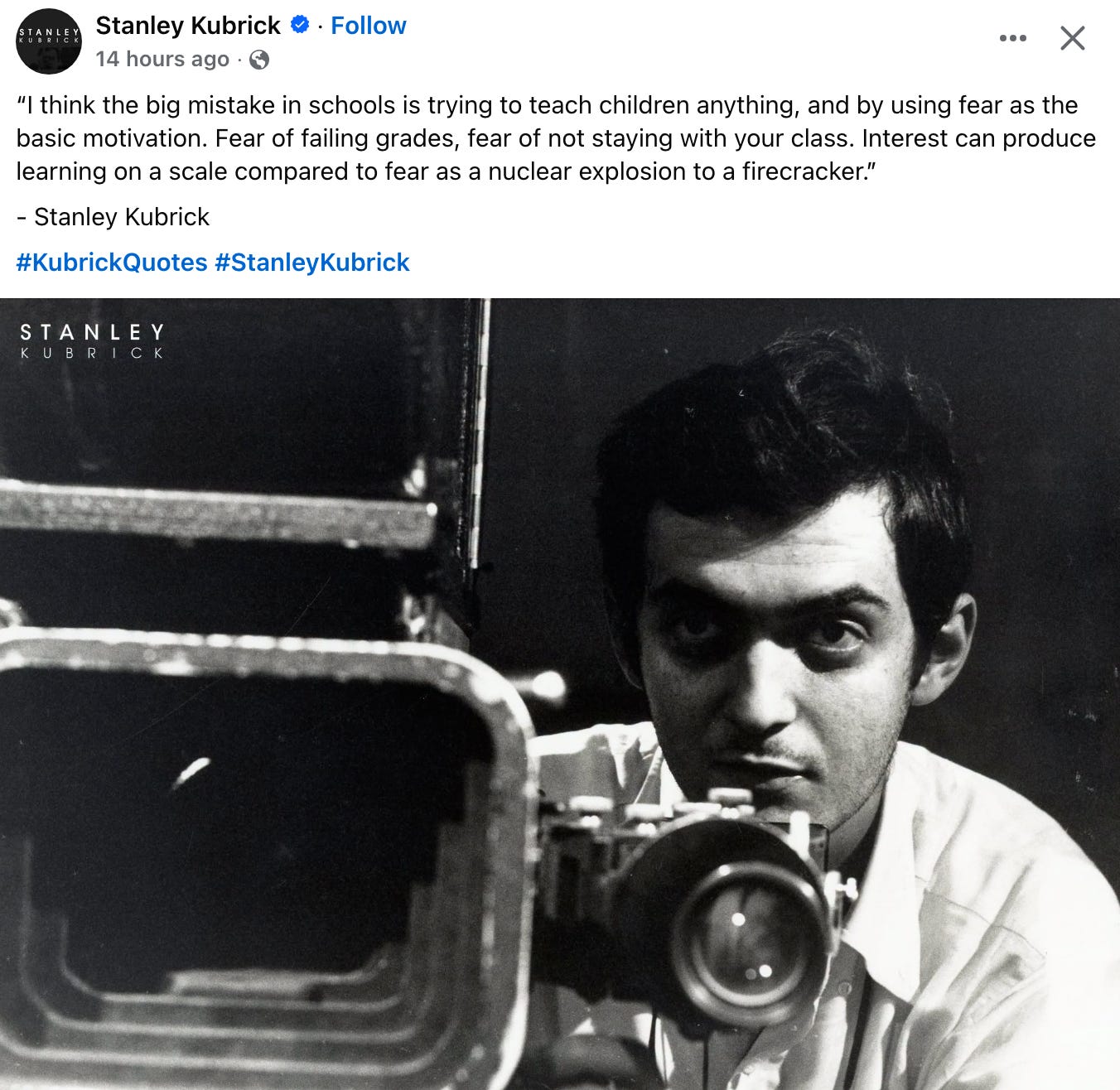
MIND CANDY
From one of the greatest film directors of our time. Most people agree but nothing changes.
Most AI in education conversations are still focused on:
• policy
• frameworks
• risks
• academic integrity
• future possibilities
That work matters. But the conversation cannot stop there.
Thinkers such as Seymour Papert, Ken Robinson, Sugata Mitra and John Dewey all argued, in different ways, that education should develop curiosity, creativity, agency, problem solving and independent thinking, not simply system compliance.
The difference is that much of the discussion still remains theoretical.
I have spent years developing and classroom testing practical AI education resources:
• AI storytelling projects
• books that introduce AI discussions naturally
• lesson plans
• prompting activities
• creative thinking programs
• AI literacy experiences
• classroom AI applications
The work already exists.
Practitioners such as Ethan Mollick George Couros, AJ Juliani, Dan Fitzpatrick John Spencer Angela Magill and myself are not simply discussing AI in theory. We are applying it to classroom resources, creative projects, AI literacy models and practical learning experiences that students and teachers can use now.
Students are already engaging with AI creatively, critically and safely through storytelling, imagination, prompting, discussion and problem solving.
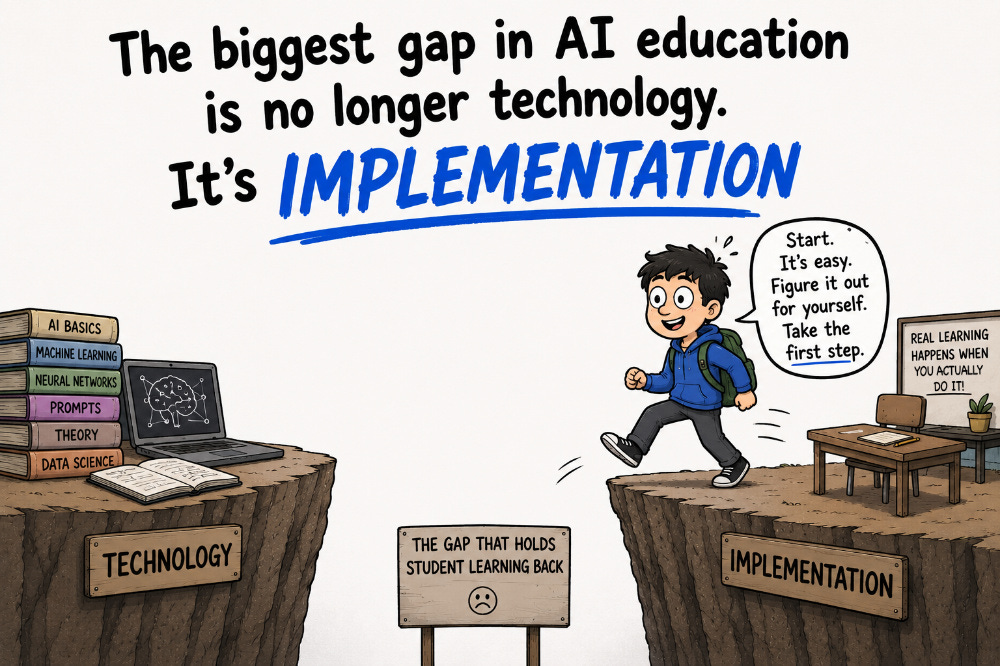
The gap is no longer ideas.
The gap is implementation.
Education departments are still largely discussing AI while students are already living in an AI world.
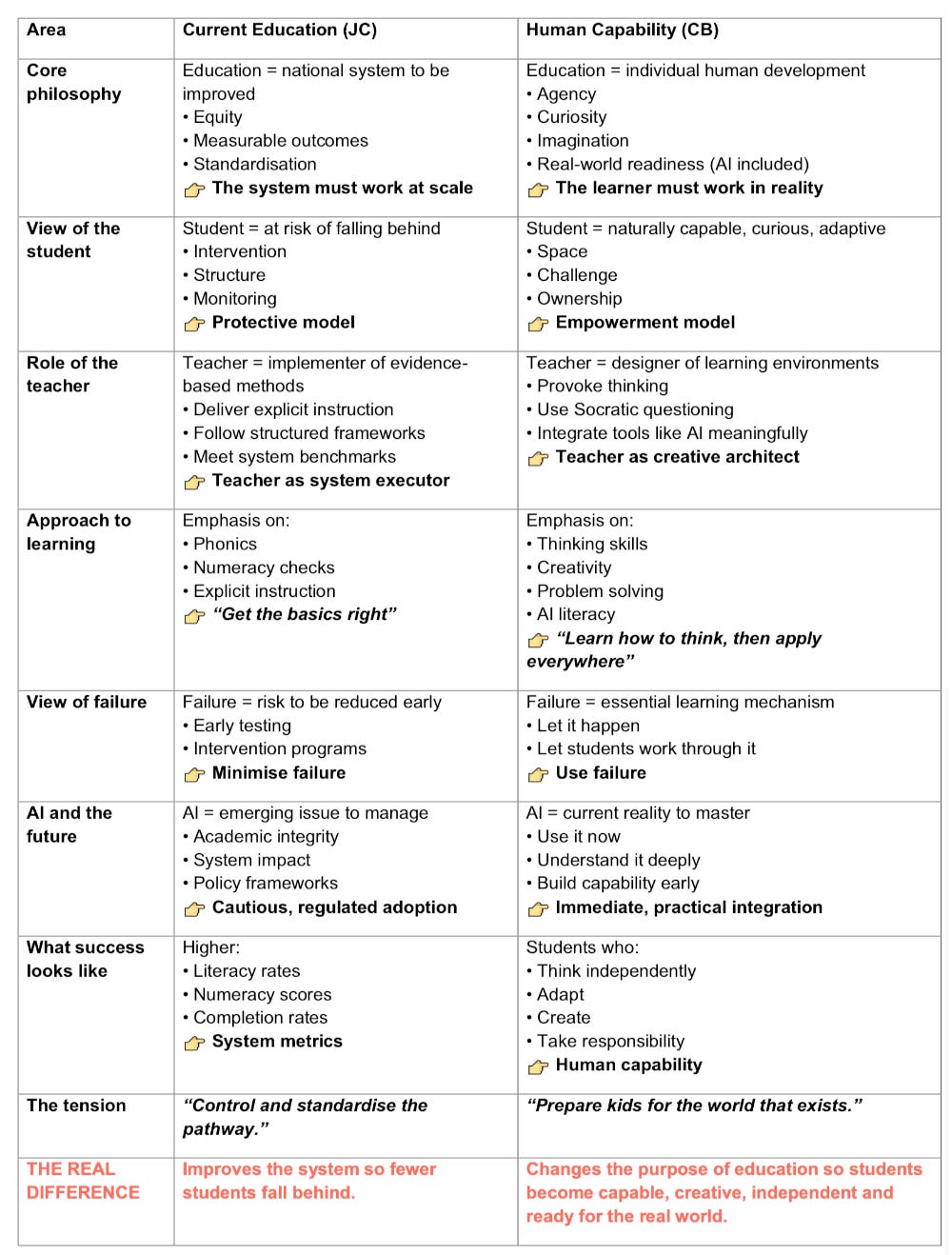
The purpose of education has changed.
Use AI now, creatively, safely and practically, to build independent thinkers.
The future requires adaptability, creativity and AI literacy. Education systems still prioritise compliance and standardisation.
This email sparked a huge response on LinkedIn.
The comments, messages and discussions showed that many people already recognise these ideas make sense. They can see the cracks in the current system and the need for something different.
The challenge is no longer awareness.
It’s implementation.
How do we move beyond endless discussion, policy documents and theory and actually put these ideas into practice in classrooms, schools and communities?
That’s the real conversation we need to be having now. What do you think?
Locus of Control
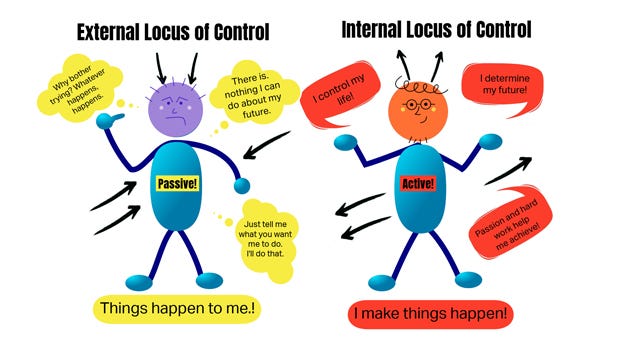
EXTRINSIC motivation goes hand in hand with an external locus of control.
Do this because someone said so.
INTRINSIC motivation shifts that balance and students start to see themselves as active agents in their own learning. That belief is far more powerful than any reward system we could design.
Writing is a SUPER POWER
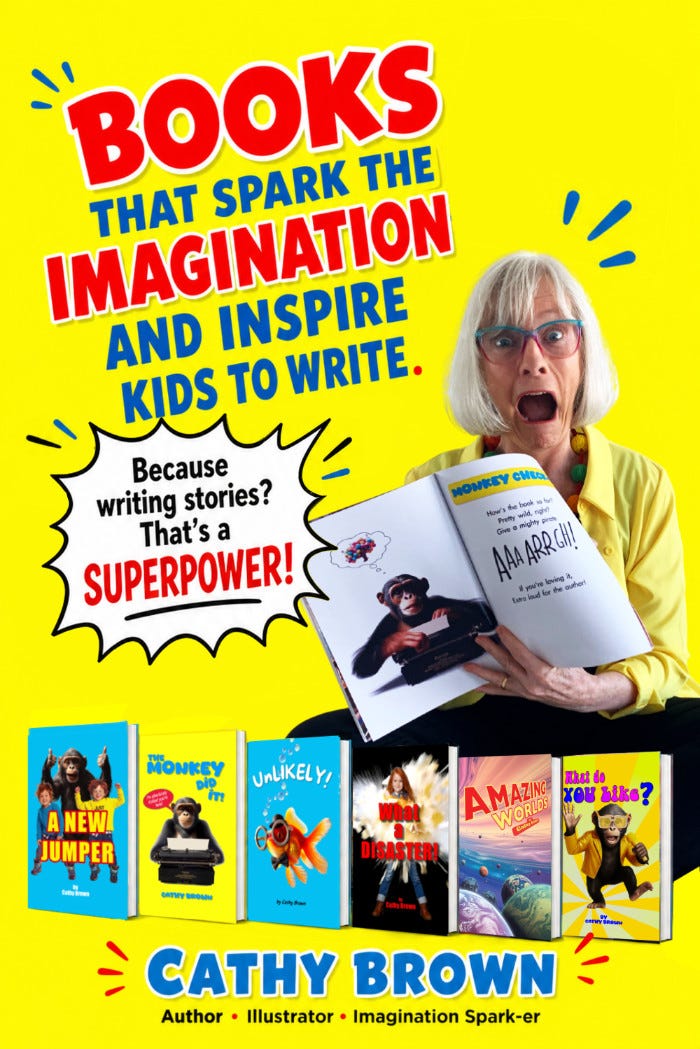
The books I have written are not read quietly. They invite interaction. They invite joining in. They invite thinking. They invite comment. They invite movement and creativity.
These books don’t just let kids hear great stories, they inspire them to create their own. As children take charge of the experience, they’re not just passive readers; they become storytellers themselves. By engaging with these interactive tales, kids learn that every great story they hear is an invitation to write their own.
It’s a cycle, from reading to imagining to writing.
So I made this poster. What do you think?
(It is me by the way reading to some preschoolers, a delight especially when Sam said - “READ IT AGAIN!” Every author’s catnip.)
Check out all the AMAZING Stories for adventurous minds of all ages…
….with a touch of Money Business

Angela Magill of Salty Sharks
If you’re looking for an example of immersive, curiosity-driven learning, take a look at Salty Sharks Aquatic Metaverse. This Australian platform combines virtual worlds, STEM, marine biology, conservation and interactive exploration in a way that feels far more like discovery than traditional classroom instruction.
What stands out is the focus on engagement, creativity and learning through experience rather than passive consumption. A fascinating glimpse into where parts of education may be heading as immersive technologies, AI and project-based learning continue to evolve.
CHECK THESE OUT LIST
VT Illusions: This wildly popular page is packed with visual tricks, brain bends and idea sparking illusions that kids and adults can’t stop exploring.
NASA Landsat Science: Type your name and watch it appear across Earth through Landsat satellite imagery in this surprisingly addictive science tool.
Rock, Paper, Scissors: What looks like a playground game turns into psychology, bluffing and fierce competition in this fascinating look inside professional rock paper scissors tournaments. INSPIRE YOUR KIDS
First Lines: Discover famous opening lines, quotes and story starters from books that can instantly spark ideas for writing, storytelling and creative thinking.
OPEN: David Price explores how curiosity, collaboration and sharing ideas openly can transform learning, creativity and the way we think about education.
Enthusiasm: A powerful reminder that energy, curiosity and genuine enthusiasm can change classrooms, creativity and even the direction of your life.
VT YOUTUBE

This is a rather Sneaky Video I made also with my son. The first and last frames are stills of him, the voice and the finished video are all AI. I cloned his voice in Eleven Labs. Then used one of the Fake reviews at the back of What do YOU Like? I used Dzine to create the video and lip synch. Let me know what you think!

This Newsletter is not free, despite the misleading advertising above.
The Fee is now due. Each week you must help one colleague AI & technology who has less knowledge than you. HELP THAT PERSON even if you have to visit their classroom or do a little research and get back to them. Trust me, this will help a lot of people get their computer classrooms running better. OK I'm trusting you!!!
Editor: Cathy Brown cathy@virtualteacher.com.au
Before you go I have a question for you:
Would you be interested in learning more about AI and how to integrate into your teaching? Would you like more information about inservice and training?
No need to decide just yet, just email me if you'd like to start the ball rolling. cathy@virtualteacher.com.au or check out the VT AI Consultancy Page.